Sunday, November 14, 2010

Sudan - Fool Medamas


Background
The history of Sudan is closely linked to Egypt's. Both countries have conquered one another and both were under British and Ottoman rule. I had difficulty finding a published source on the Sudan and in the end I decided to use the web site Sudan.net. This site listed fool medamas and tamayya as possible breakfasts. We made fool medamas as our breakfast for Egypt, though we spelled it differently. Tamayya is another word for falafel and it is eaten at any time of the day.
After we made our Egyptian breakfast I ran across an article in the paper listing the best dishes in Boston. One of these dishes was the fool medamas from Falafel Palace. We were not very thrilled with our recipe so I wanted to try a much different version. Falafel Palace makes a great version more like a bean salad with fresh vegetables and a yogurt dressing. It made a great light lunch and is really cheap. The new recipe is very different than the one we used for Egypt so I decided we should do a comparison.

Fool Medamas
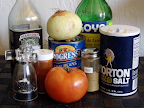
  • 1 (16 oz) can of fava beans
  • 1 large onion, chopped
  • 1 large tomato, diced
  • 1½ tbsp olive oil
  • 1 tsp ground cumin
  • ¼ cup chopped parsley,
  • 4 tbsp lemon juice
  • salt, pepper, and chili powder to taste
  • pita bread
  1. Pour fava beans and juice into a sauce pan and bring them to a boil.
  2. Mix all other ingredients—except lemon juice—in a bowl.
  3. When the bean juice has almost evaporated add the remaining ingredients to the pot along with the lemon juice.
  4. Cook uncovered for about 5 minutes, until most of the water is gone but the mixture is not dry.
  5. Eat with pita bread along with hard boiled eggs and tahini.
Results and Discussion
This recipes was much better than the one we used for Egypt. The first major improvement was the inclusion of spices so that I actually tasted something. Not mashing the fava beans was also key. When the beans are mashed they suck up all the moisture and the result is a very dry paste with some vegetables mixed into it. Not mashing the beans keeps the fool medamas moist and much more palatable.

Sunday, November 7, 2010

Colombia - Arepas de Queso


Background
Finding the dishes for this meal was very easy. I sent an email to a Colombian friend from high school and Javier promptly got back to me with several options and a reminder that Colombia also has coffee. Javier's list of recommendations was arepas, pan de bono, and bunuelos.
Bunuelos are deep fried fritters that looks a lot like doughnut holes. According to Wikipedia they most likely originated from Sephardic Jews or Arabs and are popular through out the Mediterranean and former Spanish colonies. We decided against these because we are reluctant to deep fry on a gas stove.
Pan de bono is a bread made of corn flour, cassava, cheese, and eggs. It is sometimes bagel-shaped and other times in little puff balls. Preparation is not difficult, but we decided to give the arepas a try because we like farmer's cheese and our cookbook, Secrets of Colombian Cooking, had many different varieties of arepas.
We made two kinds of arepas. The first was arepas de choclo and the second was arepas de queso. We will get to why we cooked two arepas in the discussion.

Arepas de Choclo
  • 1 cup plus 2 tbsp cut corn
  • 8 oz white farmer's cheese
  • 1½ tbsp melado
  • 1 tsp sugar
  • 1/8 tsp salt
  • oil or butter
  1. Put the corn in a food processor and chop for one minute.
  2. Grate a little less than 4 oz of the cheese.
  3. Mix corn, sugar, salt, melado and cheese.
  4. Cover a small non-stick skillet with oil or butter and place over medium heat.
  5. Place ½ cup of the mixture on the hot pan, flattening it out a little bit.
  6. Cook for 4 minutes.
  7. Flip it on a plate and cook the opposite side for 4 minutes.
  8. Serve with butter on the side and slices of the remaining cheese.

Melado
  • ¼ lb grated panela
  • ¾ cup water
  • 1 cinnamon stick
  1. Combine panela, cinnamon, and water.
  2. Simmer mixture until the panela dissolves completely.
  3. Boil for 5 minutes and allow the syrup to thicken.

Arepas de Queso
  • 1/3 cup instant masa
  • 1/3 cup warm water
  • 2 tsp soft butter
  • ½ tsp salt
  • ¼ lb grated farmer's cheese
  • oil or butter for cooking
  1. Mix cornmeal, water, butter, and salt for 30 seconds by hand until it has a pasty consistency. Let it stand for 5 minutes.
  2. Knead this mixture with your hands for a minute until it feels doughy.
  3. Add the grated cheese to the dough and knead again.
  4. Divide the dough into 4 balls.
  5. Shape the balls into little patties about ½ in thick.
  6. Melt a knob of butter into a frying pan over medium heat.
  7. Cook the Arepas on both sides for 2 minutes until they are a golden color.
  8. Serve with melado.

Results and Discussion
We had an extra hour this morning because of the time shift and we really needed it. The first mistake was trying to make the melado and not adding the water. This gives a very bad result and should be avoided if at all possible.
When we made the Arepas de Choclo they fell apart and stuck to the pan when we flipped them. I think the problem had a few possible causes. The one I suspect most was our failure to add enough oil. The recipe just called for a light coating but given the low amount of butter the author called on the arepas de queso I think she is stingy with the oil. Another problem might have been increased water content because we used frozen corn. I could have also failed to get the heat on the pan right. Whatever the cause they fell apart when we tried to flip them and the results looked like badly botched omelet. We snacked on them while making the arepas de queso and they were nothing really special.
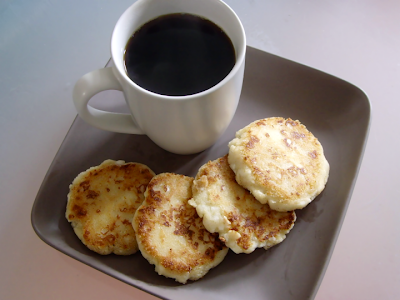
The arepas de queso were very successful. I was initially worried about the ratio of cheese to masa but it worked very nicely. The outsides were crisp and cheese was well melted. The salt called for in the recipe was unneeded because the saltiness of the cheese. Dipping it in the melado cuts the salt and adds a very nice subtle sweetness. The author recommends making these as appetizers for parties and I would agree with her. I would just use much more oil or butter than she recommends.

Sunday, October 31, 2010

Ukraine - Kasha Porridge


Background
We had lots of good resources for Ukrainian cuisine. The first source was a friend who grew up in the Ukraine (and also introduced the two of us). She recommended buckwheat kasha porridge and a blintz as very traditional.

With our meal set up, I went looking for recipes. Ukrainian cookbooks were very easy to find. We got Please to the Table, which we used for Russia. It had no recipe for kasha porridge. Next we checked out The Best of Ukrainian Cuisine and also found no porridge recipe. The next book I found was Ukrainian Cuisine and this one was very interesting. First it was from Julia Child's cookbook collection which is pretty cool. The book itself was written in the USSR in the 1970s and translated a couple of years later. I am not sure if it is the translation or the actual tone of the book but this was easily the most authoritarian cookbook I have ever read. It spent a great deal of time focusing on how to space your meal throughout the day, declaring how many canned products are more readily available than in the past and frequently citing the works of Pavlov on appetite stimulation. Here are some quotes from the book: “regular meals at fixed times establish a proper pattern of reflexes” and “to arouse the appetite and ensure that meal are thoroughly enjoyed the important thing is eating at regular hours.” This book contained no kasha porridge recipes either, but it had lots of uses for tripe and lungs if you are looking for recipes.

Please to the Table provides some wonderful context about the importance of kasha in eastern Europe. Six hundred years ago kasha simply meant feast. It has a place in rituals such as funerals and weddings. The book also lists many different expressions involving kasha such as “he's got kasha in his head” (he's mixed up) and “you can't make kasha with him” (you will get nowhere with him).
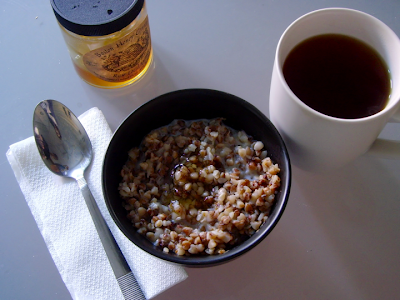
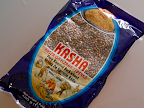
We bought our kasha from the Russian Village market, which according to the internet is actually owned by a Ukrainian.  The brand pictured has English directions on the packet, which we followed—the recipe apparently too simple to merit inclusion in cookbooks. We also had a very nice Russian tea blend from the same shop.

Basic Kasha Porridge
  • 1 cup kasha
  • 2 cups water
  • 1 tsp salt
  1. Combine all ingredients in a sauce pan and bring to a boil.
  2. Simmer for 15 to 20 minutes, stirring occasionally, adding add more water if needed.
  3. Serve with milk and sweetener in amounts of your preference.

Results and Discussion
This breakfast was very simple in every sense. The dish that it seems most appropriate to compare this one to is oatmeal (actually I think it's more like Wheatena –Kitty). The roasted seeds give a subtle smokey flavor. The kasha also feels much more substantive as you chew it and it gives resistance to your bite than oatmeal.