Showing posts with label South America. Show all posts

Sunday, September 18, 2011

Ecuador - Quimbolitos and Coffee


Background
Ecuador straddles the equator on the west coast of South America. Its major regions are the coastal lowlands, the Andes mountains, the Amazon, and the Galapagos Islands. The cuisine of the lowlands is heavier in seafood with lots of ceviche. The mountain regions tend to have more grains and farmed meats. The mountain regions are also known for eating guinea pig. Yuca is the major staple in the Amazon region.
We chose to make sweet tamales, called quimbolitos, which we found in The South American Table. They are served as snacks, desserts, or for breakfast with a cup of coffee. The recipe varies from region to region, most often in the proportion of cornmeal to wheat flour. The ratio of lard to butter also varies.  We decided to skip the raisins since we forgot to buy any Kitty doesn't really like them.
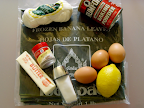
The exotic ingredient for this week is the banana leaf. We are using it a wrapper for the tamale dough. Banana leaves can be found in the produce or frozen section of most market that carry Latin foods. They are also used as serving dishes across tropical and equatorial regions. The leaves are very large!
Quimbolitos
  • 2 sticks unsalted butter, softened
  • ¾ cup + 2 tbsp sugar
  • 6 eggs, separated
  • 6 oz chihuahua cheese, shredded
  • ½ cup cornmeal
  • 1 cup flour
  • 1 tsp baking powder
  • 1 tbsp lemon zest
  • ½ tsp anise seeds
  • 2 tbsp brandy or anise liquor
  • banana leaves, thawed if frozen and cut into 10x14 inch rectangles
  1. Cream butter and ¾ cup of sugar.
  2. Add egg yolks one at a time, beat until the mixture is light and fluffy.
  3. Stir in cheese, cornmeal, flour, baking powder, zest, and anise.
  4. Mix egg whites with a pinch of salt.
  5. Beat the eggs until you have soft peaks, then add 2 tbsp of sugar and continue to beat until you get glossy, stiff peaks.
  6. Fold 1/3 of the egg whites into the butter and cheese mixture to lighten, then gently fold in the remaining egg whites.
  7. Spread ¾ cup of the mixture onto the middle of the banana leaf to a thickness of ¾ inch.
  8. Fold the long sides of the leaf together over the filling. Fold short ends under the leaf.
  9. If the leaves seem flimsy or have holes you can then wrap the packets again in aluminum foil. Otherwise tie them up using kitchen twine.
  10. Steam for about 20 minutes.

Results and Discussion
These turn out really well. A lump of butter, cheese, and flour goes into the banana leaf and very moist, puffy cake comes out. The shredded cheese adds texture and the lemon and anise give a really nice flavor. If you want to cook a lot of these at once a multi-level bamboo steamer basket might work very well.
The banana leaves are not eaten but we were trying to describe their smell. Kitty thought they smelled like tea. The smell reminded me of artichoke. In the end we decided they had the general vegetable-y leaf smell. They are not edible, probably because the leaves are so tough and fibrous.
You will probably have lots of leftover banana leaves as they are commonly sold in one pound bags. They can be used like a natural tinfoil to wrap things that you want to roast or steam, or as serving "dishes." If you leaves have not already been frozen you can also just freeze them, otherwise they last 1-3 weeks in the fridge.

Sunday, July 10, 2011

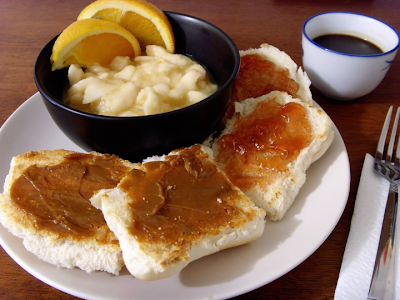
Chile - Chirimoya Alegre, Jam & Manjar Blanco on Toast


Background
Breakfast in Chile is very low key and continental. Every description we read online said it was bread, jam, and coffee. Kitty found that a usual spread is manjar blanco. It is very like dulce de leche, a type of milk caramel very popular in Latin America. I also found a recipe in The South American Table for cherimoya marinated in orange juice and rum, which the author notes is served every day when the fruit is in season.
Cherimoya is native to the Chilean highlands and can grow in colder temperatures. It belongs to the family Annonceae which includes flowering plant shrubs and trees with a mostly tropical distribution. It was domesticated around 1000 BC and has seven varieties under cultivation.

Chirimoya Alegre
  • 2 ripe but firm cherimoyas
  • Juice of 1 lemon
  • ½ cup fresh-squeezed orange juice
  • Sugar to taste (optional)
  • 2 tbsp rum (optional)
  1. Slice the cherimoyas in half, and scrape the flesh from the inside of the skin.
  2. Pick the out the large black seeds and cut the flesh into tiny pieces. (The act of picking out the seeds takes care of a lot of the shredding process.)
  3. Mix in the lemon juice, then add the orange juice, and sugar and rum to taste.
  4. Marinate until chilled and serve.

Results and Discussion
There did not seem to be much consensus on the type of jam, so we chose guava since they are also grown in Chile. But the jam was greatly overshadowed by the manjar. Though we had only dulce de leche available; from varying descriptions it is either a good substitute or exactly the same (our jar in fact had "manjar" amongst the various descriptions on the label). Either way the stuff is pure caramel goodness and delicious on toast. Our can of La Lechera brand dulce de leche also had a great recipe on the back for a flan-like desert.
The cherimoya was nice. Before we marinated it had a pulpy texture and it was slightly sweet. It also had a slight lemon flavor and a bit of a coconut aroma. But the marinade's flavor over powered the cherimoya. We had prepared it the night before and left it in the fridge until morning, which seems to be much too long. Some research into other recipes suggest a marinade time of around 2 hours. I will definitely try playing with this fruit in the future or just eat it plain. (Not so much, I don't think, they're about $5 apiece at Market Basket! –Kitty)

Sunday, March 20, 2011

Venezuela - Arepas de Queso


Background
Like most South American countries, Venezuelan cuisine is a blend of Native and European cuisines. The predominant European influences are Spanish, Portuguese, French, and Italian.
We had several options for breakfast. Mandoca are doughnuts made from cornmeal, eaten with butter and cheese. Caraotas is a spicy black bean dish. Perico is a scrambled egg dish with vegetables. Arepas are cornmeal pancakes which go back to pre-Colombian times. We decided to make the arepas as they were easiest to find a recipe for, plus we could compare to the Columbian arepas we made before.
We found our recipe in The South American Table, but when we got the book from the library we found the pages on arepas missing! Fortunately this section was available via Google books and contains lots of information comparing Colombian and Venezuelan arepas. The major contrast between the two is that the Venezuelan version has a softer center and is sometimes used to wrap around fillings. The recipes offered by the book were one with cheese and the other with a pork and beef filling. We chose the arepas de queso as we were making several for guests and it would be easier than stuffing the dough.
A point of interest brought up by the book was the different cornmeals used for making arepas. The book specifically mentions that one should use masarepa (another type of cornflour) instead of the masa harina we used for Colombia. A discussion of the differences in uses and preparations can be found here. Masarepa can be purchased at stores selling Goya products.

Basic Arepa Dough
  • 1 cup masarepa
  • ½ tsp salt
  • 1½ cups hot water
  1. Combine flour and salt in a bowl
  2. Add water and mix until you have a soft dough
  3. Cover and let it stand for 5 minutes.
  4. Knead for an additional 3 minutes until it is smooth.
  5. Add and little more water and continue kneading if the dough is too dry.

Arepas de Queso
  • 1 large egg yolk
  • 2 tbsp unsalted butter
  • 2 oz chihuahua or mozzarella cheese, shredded
  1. Knead the dough with the egg yolk, butter, and cheese.
  2. Shape into disks 4 inches in diameter and ¼ inch thick.
  3. Grease a skillet or pan with oil and bring to a medium heat.
  4. Slowly cook on both sides until a crust forms flipping them several times.
  5. Transfer the arepas to an ungreased baking sheet and bake for at 350 for 15 minutes.
  6. A hollow sound when tapped means they are done. Serve with butter, cream cheese, or goat cheese.

Results and Discussion
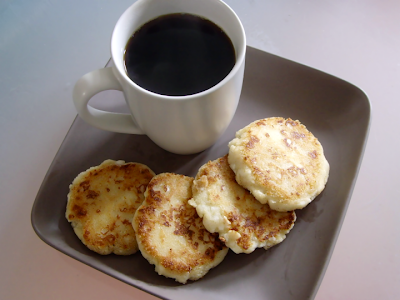
These arepas are quite good. The outside is crispy and the inside is similar to grits. The cheese and butter keep the inside moist while giving a good color on the outside. The slightly sour taste of the goat cheese goes very nicely and provides a contrast of texture.
The major difference between Venezuela and Colombia was amount of moisture in the finished arepas. The Colombian version was a bit drier on the inside and not quite a creamy.

Saturday, February 5, 2011

Peru - Chicharrones Sandwich with Salsa Criolla


Background
The major influences on Peruvian cuisine are the Inca and the Spanish. Japanese and Chinese influence came later, a result of immigration in the 19th century. Potatoes are native to this region (1,000 varieties) and are a cornerstone of the cuisine. Quinoa is the other major starch contributed by this region. The Spanish conquest brought in European flora and fauna, greatly increasing the variety in the diet. The collapse of the Spanish Empire and Peru's independence resulted in an open immigration policy and growth in diversity in metropolitan areas. In addition to the ethnic diversity, Peru has a large quantity of regional variation.

Finding recipes Peruvian recipes was very easy. We found three fantastic books that provide great recipes and information. The Art of Peruvian Cuisine has great background reading and a wonderful section explaining and showing novel ingredients. Eat Smart in Peru is a compact guide to the cuisine with a balance of information and recipes. We ended up using The Exotic Kitchens of Peru because it had the recipes we needed.

None of the books mentioned breakfast directly, so I asked a Peruvian friend for her advice. She recommended a few dishes, and we settled on sandwiches of chicharrones served with salsa criolla. Chicharrones are fried pork, and salsa criolla contains hot peppers and aji amarillo chilies. We were unable to locate whole aji amarillos, but we found them as jarred paste which we could substitute. I was not able to find any specific information on the sandwich bread but photos I saw online had rolls with thick crusts. The drink for breakfast is coffee.

Chicharrones de Chancho (Crispy Pork Cubes)
  • 1 lb pork spare ribs, cut into 2 inch sections
  • 1 tsp salt
  • ½ tsp ground cumin
  • 1 tbsp lime juice
  • 1 tsp oil
  1. Mix all ingredients except oil in a bowl and let marinate for 15 minutes.
  2. Heat oil in a skillet on low.
  3. Add the pork and fry at low temperatures for about 30 minutes.
  4. The pork is done then the meat is brown and crisp with all of the fat cooked off.
  5. Drain pieces over paper towels and serve as soon as possible.
Salsa Criolla
  • 2 cups red onion, coarsely chopped
  • 1 tsp chopped/paste aji amarillo, remove seeds if chopping.
  • 3-4 tbsp lime juice
  • 1 tsp salt
  • 1 tbsp chopped cilantro
  1. Combine all ingredients by hand, or
  2. Pulse all ingredients in a food processor to make a coarse salsa.
  3. Serve immediately.
Results and Discussion
The red onions give the salsa a very sharp taste. The lime adds a sour flavor and the cilantro gives a nice accent. The heat and sweet flavor from the aji amarillo were subtle but nice. The peppers added less heat than I expected. The paste eaten raw packs real punch.
And fried pork is plain good. Pork fried to the point that the fat becomes really crispy and has that concentrated blast of salt is even better. In the future I might cook them at a slightly higher heat as some of the fat did not get as crispy as it could have been. We used pork spare ribs but pork roast was another option. I would use pork roast in the future since it was much easier to cut up. (OK, again, Kitty totally disagrees, rib meat is way better than pork roast for this.) Getting meat off the ribs was a little annoying. (Whatever.)

Sunday, November 28, 2010

Argentina - Medialunas and Yerba Mate


Background
Argentine cuisine is a blend of French, Spanish, Italian, and Andean influences. This split of European and native influences is found in the differences between the cities and rural areas.
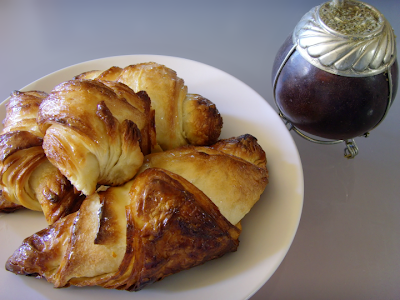
I found lots of information on Argentine cuisine is and its regional variations. All of the books basically mention breakfast as “minimal,” which I interpret as very simple. Looking online I learned that breakfast is either bread covered with dulce de leche, or medialunas, a croissant-shaped pastry. I chose to make medialunas because I wanted to try a variation on the croissant.  The drink is either cafe con leche or a tea made from the leaves of the yerba mate plant called mate. Yerba mate is traditionally served from a hollowed gourd, which we conveniently had in the apartment.

Recipe
For this weeks recipe we refer you to the blog of an American ex-patriate living in Necochea, Argentina, who did a wonderful job describing the process. I had to make a substitution for the yeast. Her recipe uses 0.9 oz of fresh yeast which expires quickly because the yeast is active when purchased. We do not bake enough to keep this on hand so I used a substitution of 1½ packages of active dry yeast. Another issue created by this substitution is the need of warm water to activate the yeast. I heated up the milk used in the recipe to serve this purpose. We also chose to put the vanilla extract in the glaze and not in the dough.

Yerba Mate Video


Results and Discussion
The medialunas came out great despite some reservations about the dough I will discuss later. They smelled fantastic while baking and bled butter as they puffed and browned. The vanilla sugar glaze added a nice texture and sweetness. While they were flaky on the outside, the inside felt meatier and solid—a nice contrast.
I was not a fan of the yerba mate. It was bitter and very overpowering. The taste changed with each sip as continued to steep and preferred the earlier sips to the later ones. In the second brewing of the leaves the bitterness was greatly reduced but still pretty strong. Some people add sugar to help with this problem but we were drinking it out of a gourd my mother-in-law gave my wife after her trip to Argentina and putting sugar into these is ill-advised. I should also mention that the bombilla conducts heat so sip carefully if it has been sitting in the water for a long time.
I was initially concerned because the dough was very dry. I checked this against the croissant recipe we used for France and based on the ratios the dryness seemed reasonable. With a dryer dough, cold rising, and my impatience to let the dough get up to room temperature, working the dough was difficult.  Kitty came up with a good solution to this on the final turn and I wrapped the dough in a damp warm rag for 10 minutes. Letting the dough rest for an hour outside the fridge in the morning reduced this problem.
I was also nagged by a feeling that the yeast had not fully activated and that this inhibited the rising. I saw the yeast bubbling in the milk before I added it to the mixture so I know it activated.
I would also like to compare the writing of the recipe in this breakfast to the French croissant. This recipe was much more free form in its approach giving the essential guidelines but allowing the cook to shape and size the final item. The French recipe was much more highly detailed with exact dimensions and more information about resting times and other details. It was a gift to a cook trying something intimidating for the first time. The medialunas recipe was great for a second pass at this type of pastry because more awareness of basic techniques are placed on the cook. It demonstrates the importance of understanding why something is done versus following instructions.

Sunday, November 7, 2010

Colombia - Arepas de Queso


Background
Finding the dishes for this meal was very easy. I sent an email to a Colombian friend from high school and Javier promptly got back to me with several options and a reminder that Colombia also has coffee. Javier's list of recommendations was arepas, pan de bono, and bunuelos.
Bunuelos are deep fried fritters that looks a lot like doughnut holes. According to Wikipedia they most likely originated from Sephardic Jews or Arabs and are popular through out the Mediterranean and former Spanish colonies. We decided against these because we are reluctant to deep fry on a gas stove.
Pan de bono is a bread made of corn flour, cassava, cheese, and eggs. It is sometimes bagel-shaped and other times in little puff balls. Preparation is not difficult, but we decided to give the arepas a try because we like farmer's cheese and our cookbook, Secrets of Colombian Cooking, had many different varieties of arepas.
We made two kinds of arepas. The first was arepas de choclo and the second was arepas de queso. We will get to why we cooked two arepas in the discussion.

Arepas de Choclo
  • 1 cup plus 2 tbsp cut corn
  • 8 oz white farmer's cheese
  • 1½ tbsp melado
  • 1 tsp sugar
  • 1/8 tsp salt
  • oil or butter
  1. Put the corn in a food processor and chop for one minute.
  2. Grate a little less than 4 oz of the cheese.
  3. Mix corn, sugar, salt, melado and cheese.
  4. Cover a small non-stick skillet with oil or butter and place over medium heat.
  5. Place ½ cup of the mixture on the hot pan, flattening it out a little bit.
  6. Cook for 4 minutes.
  7. Flip it on a plate and cook the opposite side for 4 minutes.
  8. Serve with butter on the side and slices of the remaining cheese.

Melado
  • ¼ lb grated panela
  • ¾ cup water
  • 1 cinnamon stick
  1. Combine panela, cinnamon, and water.
  2. Simmer mixture until the panela dissolves completely.
  3. Boil for 5 minutes and allow the syrup to thicken.

Arepas de Queso
  • 1/3 cup instant masa
  • 1/3 cup warm water
  • 2 tsp soft butter
  • ½ tsp salt
  • ¼ lb grated farmer's cheese
  • oil or butter for cooking
  1. Mix cornmeal, water, butter, and salt for 30 seconds by hand until it has a pasty consistency. Let it stand for 5 minutes.
  2. Knead this mixture with your hands for a minute until it feels doughy.
  3. Add the grated cheese to the dough and knead again.
  4. Divide the dough into 4 balls.
  5. Shape the balls into little patties about ½ in thick.
  6. Melt a knob of butter into a frying pan over medium heat.
  7. Cook the Arepas on both sides for 2 minutes until they are a golden color.
  8. Serve with melado.

Results and Discussion
We had an extra hour this morning because of the time shift and we really needed it. The first mistake was trying to make the melado and not adding the water. This gives a very bad result and should be avoided if at all possible.
When we made the Arepas de Choclo they fell apart and stuck to the pan when we flipped them. I think the problem had a few possible causes. The one I suspect most was our failure to add enough oil. The recipe just called for a light coating but given the low amount of butter the author called on the arepas de queso I think she is stingy with the oil. Another problem might have been increased water content because we used frozen corn. I could have also failed to get the heat on the pan right. Whatever the cause they fell apart when we tried to flip them and the results looked like badly botched omelet. We snacked on them while making the arepas de queso and they were nothing really special.
The arepas de queso were very successful. I was initially worried about the ratio of cheese to masa but it worked very nicely. The outsides were crisp and cheese was well melted. The salt called for in the recipe was unneeded because the saltiness of the cheese. Dipping it in the melado cuts the salt and adds a very nice subtle sweetness. The author recommends making these as appetizers for parties and I would agree with her. I would just use much more oil or butter than she recommends.

Saturday, April 17, 2010

Brazil - Fruit, Cheese, & Ham Tray


Background
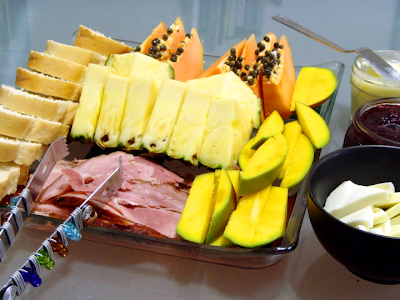
We were unable to find a cookbook that focused exclusively on Brazil. Fortunately we ran into a friend Fred Meinberg who is a native of Brazil in Harvard Square and asked him. He simply said fresh fruit, some ham, a type of farmers cheese, a french bread and some very black coffee. So we bought some fruit and already had some ham leftover from Easter.

Ingredients
1/2 of a papaya
1/4 of a pineapple sliced
1 mango sliced
1 loaf of french bread sliced
homemade butter
Queso fresco
Cooked ham
Jam

Procedure
Cut up fruit into desired sizes.
Slice ham.
Cut up bread.
Slice the cheese.
Brew coffee using the instruction on the packaging.

Results and Discussion
This breakfast was the simplest one so far. The papaya is a slightly sweeter melon but it is much more bitter towards the skin. The seeds have a somewhat peppery flavor and it is worthing eating a couple. The queso fresco is very similar in texture to mozzarella. Fred told us that it is absolutely amazing fresh but that it is very hard to find it in the states. The homemade butter was very nice on the bread and should be made the night before as it does not keep as well.