Showing posts with label soup. Show all posts

Monday, March 28, 2011

Malaysia - Bak Kut Teh


Background
Modern Malaysia is a fairly new country, having come into its modern form with the creation of the Federation of Malaysia in 1963, joining with the territorries of Sabah, Sarawak, and the city of Singapore. Singapore left the federation in 1965, so we will get back to them in the future. Malaysia occupies the lower bulge of the Malay peninsula and the northern coast of the island of Borneo. As a result of this distance the two parts of the countries have very distinct histories and culture.
The peninsular part of the country has a long standing history as a trade center. Buminputra is the catch all term for Muslims on the peninsula. The non-Muslim groups are the Chinese, Indian, Portuguese and the indigenous Orang Asli. Islam's influence was brought to the island via Indian traders. Indian communities did not establish large communities until the mid 19th century during British rule. Chinese set up long term trading out posts and began intermarrying in the 15th century. Portuguese settlements were established in the 16th century with rapid intermarriage as well.
The Borneo have a wide diversity of indigenous tribes. The coastal tribes have diets consisting of fish and while the hill tribes tend to subsist on roots and game.
The Lonely Planet Food Guide to Malaysia and Singapore is a concise and excellent resource. Finding information on on breakfast was pretty easy for Malaysia. Nasi lemak consists of steamed rice with coconut mist eaten with anchovies, peanuts, cucumbers, and chili sauce. Idli are black lentil and rice patties. Roti bread served with various topping are also common breakfast dishes. Bak kut teh is a broth made with chopped pork ribs and spices and served with rice. The name translates as pork rib tea and this name along with my general love of pork ribs made me choose this one. A chicken version called chik kuh teh is eaten by the Muslim population.
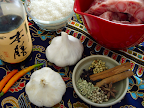
The tea has many novel spices and roots used in its preparation. White pepper is the exact same seed as black pepper except the pepper fruit's skin is removed before before the drying process. Star anise is the seed of an evergreen tree found in the southwest of China. It gets its name from its close taste to regular anise but the actual plants are very different. Several components of the dish are meant for taste and medicine. Dang Gui (angelica root) is considered the female ginseng and is in the same family as coriander and celery. Yok Chok (Solomon's seal rhizome) is a starchy root. Kei Chee (boxthorne berry) are members of the new world nightshade family. I was only able to locate the Yok Chok in a 2 pound bag so I decided to omit the medicinal herbs from the recipe we made. I include the proportion below if you are able to find and use them.
The chopped pork ribs can be purchased at a Chinese market ready to use. If buying whole ribs make sure you are fully awake before going to work with your cleaver, or chop them up the night before.

Bak Kut Teh
  • 1 lb chopped pork ribs, 1 ½ inches in length
  • 2 heads of garlic, separated, with the skins intact
  • 2 red chillies
  • Dark soy sauce
  • Salt
  • Spice pouch
    • 2 cinnamon sticks
    • 6 cloves
    • 1 tsp black peppercorns
    • 1 tsp white peppercorns
    • ½ tsp coriander seeds
    • ½ tsp fennel seeds
  • Herb mixture (optional)
    • 5 slices dang gui (angelica root)
    • 5 slice yok chok (Solomon's seal rhizome)
    • 1 tbsp kei chee (boxthorn berries)
  1. Put spices and herbs into a muslin pouch or into cheese cloth.
  2. Place ribs and unpeeled garlic at the bottom of a sauce pan.
  3. Nest the muslin pouch in the middle of the ribs.
  4. Add 5 cups of water.
  5. Bring the water to a boil over medium heat.
  6. Simmer until the meat is tender. (Our meat took about 45 minutes to be done.)
  7. Add soy sauce and salt to taste.
  8. Remove the spice pouch and serve in large bowls with short grain rice on the sides.
  9. Thinly slice the chilies and place them in a shallow dish. Cover them with a shallow layer of soy sauce and use this for dipping the ribs.
Results and Discussion
This breakfast was not nearly as complicated as it might appear. Once the ingredients are together you can just let it simmer while you take care of other things.
The broth was very surprising. The first surprise was that it was not completely over powered by garlic. I think keeping the garlic unpeeled kept the flavor from overwhelming the broth. The pepper seeds and spices blend into a nice background. The star anise has a nice licorice flavor that hovers over the rest of the flavors. The pork ribs provide the broth with a rich texture, but it is not too heavy.
The chili soy sauce gave the ribs some heat and a nice flavor, but eating them with chopsticks is a bit of a challenge!

Sunday, March 6, 2011

Uzbekistan - Shirkovok


Background
Uzbekistan is located in central Asia and has been a territorial football for several thousand years. Its ethnic diversity and location has naturally given it a wide diversity of cuisine. China greatly influenced its cooking, while India was more influential in terms of cooking utensils. I did not expect to find Korean influence, because the countries are over 3,000 miles apart, but a large Korean population was relocated there by Stalin in 1938.
Research for this meal turned out to be easier than I expected. I found a blog dedicated to Uzbek cuisine that listed several breakfast options.
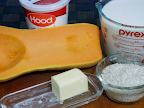
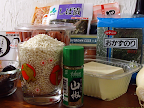
Gu'shtli quymoq is an omelette containing meat, vegetables, and coriander. Tuhum dolma is a hard boiled egg served with cheese and cream cheese. Sutil ugra is a noodle dish with browned onions and milk. Shirguruch is a cream of rice dish. Shirkovok is a pumpkin soup with rice and butter. We were able to find a recipe for Shirkovok in The Art of Uzbek Cooking. We substituted butternut squash for the pumpkins since they are hard to find this time of year.

Pumpkin and Rice Milk Soup (Shirkovok)
  • 4 cups water
  • 2/3 cup long grain rice
  • 1 ½ cups diced pumpkin or butternut squash
  • 4 cups milk (NOT skim milk)
  • 1 tbsp butter
  • Salt
  1. Bring the salted water to a boil.
  2. Add the rice and pumpkin.
  3. Simmer on low heat for 20 minutes.
  4. Reserve 1 cup of the cooking liquid and drain the rest.
  5. Add back the reserved cooking liquid and the milk.
  6. Slowly warm over medium heat, taking care to avoid boiling.
  7. Salt to taste and add 1 tbsp of butter.
  8. Serve with sour cream.
Results and Discussion
This breakfast was a nice and simple. Most of the time is spent cooking the rice which can be done largely unattended. The taste was not anything spectacular but it was wonderful piece of comfort food for a winter morning. The squash gives some substance to what would otherwise be a pretty mushy meal. The milk base and the sour cream gives you lots of richness. The dish is also very white with white garnish—the small flecks of orange are the only real color in the dish.

Sunday, December 19, 2010

Poland - Cold Cuts, Cheese, and Borscht


Background
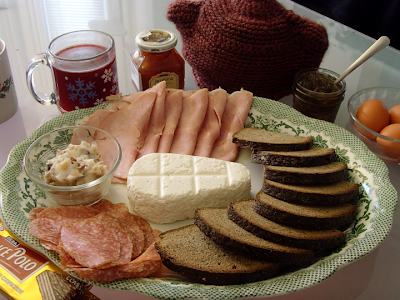
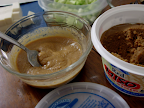
Looking for information on Polish breakfast one quickly finds it is pretty low-key and does not involve much cooking. I found a few sites mentioning little breakfast cakes, and one reference to cottage cheese pancakes. The vast majority of information said bread with cold cuts or sausage along with a farmer's cheese called twaróg. I decided to use a native resource and asked a Polish friend at work. Piotr confirmed what I read online and recommended lean ham (szynka) and Hungarian salami (węgierska salami) for the cold cuts. For bread he told me to get rye bread with a thick crust. He also recommended a spread called smalec which is rendered bacon fat with bacon in it. He also said we would probably not be able to find it.
Since all of the components of this breakfast need to be store-bought, we took the subway to the Baltic European Deli in Dorchester. We were able to get everything we needed including the smalec, which came in a pint-sized tub.
On the morning of the breakfast Piotr brought over some instant packets of barszcz (borscht), which is drunk at breakfast during the Christmas season.

Results and Discussion
This breakfast was a great success and comes together quickly once the water has boiled. The smalec spreads very smoothly and the bacon gives it a very nice flavor. The cold cut on top gives the bread a bit more substance. The twarog was a nice smooth texture but is a little bland on its own. When combined with the saltiness of the ham and salami it becomes much better, though this is not strictly traditional.
The barszcz had a deep savory flavor and tasted pretty good for an instant version of the soup. I would to try and make a proper version some time because it would nice to have a cup after coming in from the cold.

Sunday, October 24, 2010

Burma - Mohinga


Background
Burma (Myanmar) is a large country, around the size of Texas, with 125 ethnic groups. It lies between China and India in southeast Asia. Given the repressive nature of the current military government, I expected finding information on the country to be difficult. I was disappointed. A quick internet search gave lots of results and Wikipedia page on Burmese cuisine was very complete and detailed. While looking for books I quickly found lots of resources.
The three books that were the most useful for both culture and recipes were The Burmese Kitchen, Best of Burmese Cooking, and Cook and Entertain the Burmese Way. Finding what defines traditional Burmese food is rather difficult given that it lies on trade routes between the major culture of India, China, and Thailand. All of these cultures influence Burmese cuisine in some way. Traditional Burmese cuisine is concisely defined as the food in Burma that has not been influenced by it neighbors.
I found three major breakfast dishes. The first is mohinga, which is a fish and noodle soup served by street vendors. Ohhnokaukswe is a chicken and coconut noodle soup in a curry. Kaungnyin paung is traditional farmers dish made of glutinous rice with black eyed peas. Nanpyar is a commonly eaten flat bread, which while mentioned in all of the books it never appear with a recipe except in one book which has it in correctly listed in its index. I chose the mohinga because I like catfish and because it is considered the national dish, but mostly because I like catfish.

Before starting this recipe please be advised that this makes a lot. The recipe below is supposed to give 6 servings but I would estimate it at least 10 portions.

Soup Concentrate
  • 2 lbs of catfish
  • 2 stalks of lemongrass
  • 1 inch fresh ginger
  • ¼ tsp tumeric
  • 1 tsp shrimp paste
  • 1½ tbsp fish sauce
  • 4 dried red chilies
  • 5 cups of water
  1. Break open the ginger to expose the inside.
  2. Cut the lemongrass into smaller pieces to fit in the pot.
  3. Cut you your catfish fillets in half.
  4. Put all the ingredients into a pot, bring to a boil, and simmer for 30 minutes.
  5. Remove the fish from the broth and strain out the solids while retaining the broth.
  6. Remove any bones from the fish if necessary.
  7. While the broth is simmering, prepare the rest of the ingredients below.

Complete Soup
  • ½ cup jasmine rice toasted in a dry skillet, then ground to a powder in a food processor
  • 2 tbsp roasted peanuts, ground (use nut grinder if available)
  • 1½ tbsp semolina
  • 8 oz chickpeas, cooked
  • 2 tbsp peanut oil
  • ¼ tsp tumeric
  • 1 onion, thinly sliced
  • 2 garlic cloves, finely chopped
  • ¼ inch fresh ginger
  • ½ tsp paprika
  • ½ tbsp salt
  • 1½ tbsp fish sauce
  • ½ tbsp sugar
  • 6 peeled shallots (these are substitutes for banana stems)
  • 8 oz of somen noodles
  1. Mix powdered rice, semolina, and peanuts in 1 cup of water. Let it stand for at least 15 minutes.
  2. Mix chickpeas and 1 cup of water in a food processor.
  3. Heat the oil in a pot large enough to contain the final quantity of soup.
  4. Add onions, garlic, ginger, turmeric, and paprika to the oil and cook for two minutes at medium high heat.
  5. Add the fish and cook for another 5 minutes. Stir regularly.
  6. Stir in salt, sugar, and fish sauce.
  7. Add rice/semolina mix and chickpea paste.
  8. Bring to a boil, add shallots, and simmer uncovered at low heat for an hour. Stir regularly.
  9. Once the soup has thickened, cook the somen noodles and add them to the bottom of a bowl, then cover with soup.
  10. Season to taste with lime juice and garnish with scallions.
Results and Discussion
This breakfast look a long time to make. Fortunately we had a dinner of wings and pizza the night before so we were not super hungry. The length of the simmering and the broth making resulted in very deep flavors and this probably better simulated what it would be like to get this from a street vendors who has had their pot going all day. The flavors are very full and as the fish dissolves it gives the soup a porridge-like texture. The lime juice provides a very nice bite. I really gobbled this down. This would be great on cold mornings.
We also used fresh lemongrass in this recipe. When we previously used lemongrass for the Indonesia breakfast we used the dry product and the taste was awful. Using the fresh lemongrass makes a complete difference.
I feel very certain that an equally acceptable version of this could be made in a much shorter time. The initial broth could be made the night before or you could make the paste and thicken it while you are making the broth. Adding less water would also get the job done. Also invite friend over when you make this, because you make a lot!

Saturday, October 16, 2010

South Korea - Soup and Rice, Side Dishes and Kimchi


Before we start, I just want to point out that most of the time I lived in Korea, I ate something like this for breakfast:


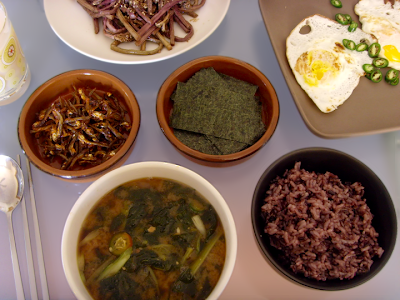
However, Corn Flakes are not really in the spirit of the Project. The traditional Korean breakfast is not really different than lunch or dinner. Rice, soup, and kimchi would suffice for a basic meal, and usually all that is hanging around from dinner so its no trouble to put together. Since we try to cook something a little more than the basic meal, we did a few more sides: fried egg, anchovies, kim (nori), and bracken salad. (This makes seven dishes total – there should always be an odd number of dishes.)

We only had to make the soup and the bracken salad from scratch; we took the recipes from Quick and Easy Korean Cooking for Everyone, a really good basic cookbook with step-by-step illustrations and pictures of all ingredients. Everything else we got at the Korean market or had in the house (also easily purchased).

The soup could really be any light soup. We had thought of doing bean-sprout soup (a traditional hangover cure!), but we've got a surplus of greens from our farm share, so it was more practical to use those.

Greens Soup
  • 1 cup frozen greens
  • 2 hot green peppers (gochu or jalapeño), sliced into rings
  • ½ green onion, sliced diagonally
  • 3½ cups dashima (seaweed) stock or chicken stock
  • 4 oz doenjang (miso)
  • crushed garlic, to taste (i.e. lots)
  1. Defrost greens, squeeze, and drain thoroughly.  Cut into 2" pieces.
  2. Bring stock to a boil.  Reduce heat, add greens and cook 3-4 minutes.
  3. Dissolve doenjang in stock, add garlic, and return to boil.
  4. Stir in peppers and green onion, remove from heat, and serve.
We have an excellent automatic rice cooker, all you need to do is put in washed rice and press the button. We added a few tablespoons of black rice which makes the whole pot a pretty purple color once cooked.

Our kimchi we did make ourselves, although somewhat nontraditionally using a recipe for Pickled Kimchi from the Complete Book of Picking. Real kimchi is not pickled, but if you've ever kept kimchi for an extended period of time in your regular refrigerator, you will appreciate the utility of being able to keep it vacuum-sealed in the pantry until needed! On the other hand, if you do purchase your kimchi, avoid the commercially jarred stuff; I have yet to find any brand that is very good. Hopefully your market will have house-made kimchi with the prepared food, and this will be much better and more authentic in taste.

Anyway, the kimchi was already done and in the pantry, so the only other things we had to cook were the bracken and the eggs. A fried egg is basically a fried egg anywhere (also makes a good dinner side dish and tasty hamburger topping). The salad could be any simple dressed vegetable—spinach, sprouts, whatever—but we had the bracken left over from something else so we used that.

Bracken Salad
  • 7 oz gosari (bracken), packaged/precooked type
  • 1 tbsp sesame oil
  • 2 tsp crushed garlic
  • 2 tbsp soy sauce
  • 1 tbsp minced green onion
  • 2 tsp cheongju (mirin)
  • 2 tsp rice vinegar
  • 1 tsp ground sesame seeds
  1. Rinse and drain bracken.
  2. Heat sesame oil in a large pan, add garlic and bracken, stir-fry until heated through.
  3. Add soy sauce, green onion, cheongju, and vinegar, continue cooking until sauce is thickened.
  4. Top with sesame seeds and serve warm or chilled.
Finally, we did make one concession to modern Korean prepackaged junk-foodiness with a bottle of Morning Rice, a sweetened rice milk drink. You can buy dozens of different energy/meal-replacement/probiotic/vitamin/diet/etc/etc drinks at any cornershop; most of them are kind of vile, but Morning Rice is pretty inoffensive (actually I think Whit really liked it) and it says "Morning" right on the bottle!

Saturday, August 21, 2010

Thailand - Kao Tome

Note: Yes, we disappeared last week. We did cook breakfast; scroll down to see that post as well.


Background
This week's menu had two excellent sources. A friend from Thailand gave us lots of recommendations. Her first recommendation was pah-tong-goh which is a version of donuts. I found some good recipes and many different spellings of this dish. The logistics of the day meant we did not have enough time to make them. It also seems to be a street food so it may not be something that Thai people make at home. Either way, I want to make this at some point in the future.
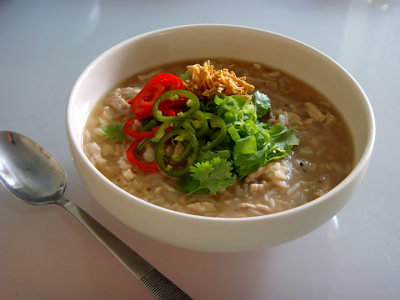
The other recommendation she made was kao tome which is a rice porridge. I was hesitant to try rice porridge again given how the cháo bò turned out. I started looking for recipes because it would provide a chance to compare the different approaches to the same dish. I came across the book Real Thai by Nancie McDermott which had a recipe that looked good. According to McDermott, Thai cuisine reflects its geography as it rests between Indian and Chinese cuisine.

Chili-Vinegar Sauce (Prik Dong Nahm Som)
Combine the following ingredients the night before and refrigerate.
  • 1/2 cup white vinegar
  • 1 tbsp fish sauce
  • 10 hot chilis thinly sliced crosswise

Fried Garlic (Gratiem Jiow)
Make the night before
  • 1/4 vegetable oil
  • 2 tbsp minced garlic
Important Note: This entire process should not take more than 3 minutes. Otherwise you will burn the garlic as I have done in the past.  Also do not use canned pre-minced garlic as the high moisture content will affect the results.
  1. Heat oil in a skillet over low heat.
  2. Test the oil by dropping in a piece of garlic. The oil is ready if it sizzles immediately.
  3. Add the rest of the garlic and cook until it starts to turn golden.
  4. When the color change starts remove the garlic from heat.
  5. The garlic will finish cooking in the hot oil.

Kao Tome
  • 4 cups chicken stock
  • 2 cups of cooked jasmine rice
  • 1/4 lb minced pork
  • 1 tbsp fish sauce
  • 1/4 cup fried garlic
  • 3 tbsp green onion cross sliced
  • 1 handful of cilantro
  • Chili-Vinegar Sauce
  1. Bring stock to a boil and stir in the rice.
  2. When the water starts to boil, add the minced pork and cook until the pork is done, about 5 minutes
  3. Stir in fish sauce and pepper.
  4. Remove from heat.
  5. Garnish with fried garlic, green onion, chili-vinegar sauce, and cilantro leaves.
  6. Add chili-vinegar sauce and fish sauce to taste.

Results and Discussion
Thai rice porridge was better than our Vietnamese rice porridge. The first major improvement was making the rice the night before and cutting an hour off the prep time. This version also had a much better taste and was lighter because we had a leaner meat. The chili-vinegar adds a nice accent that brings out the other flavors in the meal. The fried garlic is a nice enhancer as it gives little crispness at a couple of points. If I were to retry the cháo bò I would cook the rice the night before and start from there and save a lot of time. I also have lots of leftover chili vinegar sauce and I will have to find a way to use it up. I could see it working as a salad dressing with a couple of additions.

Sunday, June 20, 2010

Vietnam - Cháo Bò


Background
The two options for Vietnamese breakfast are pho and chao. Pho is a noodle soup that is served in Vietnamese restaurants. Chao is a simple rice soup. As I had never had chao I decided to make that for breakfast. Chao and pho have many variations and names depending on the meat. We made chao bo with is chao with thinly cut beef. The recipe for the chao bo was a chimera from two books: Into the Vietnamese Kitchen by Andrea Nguyen and Authentic Vietnamese Cooking by Corinne Trang. The major differences between the two dishes was there approach to the broth for the chao. Nguyen's approach required about 3 hours while Trang's recipe simply starts with water. I find it odd that Trang started with water given she writes wonderfully about the importance of broth in her introduction. We split the difference by using our own homemade broth.
We also made Ca Phe which is Vietnamese coffee for after the breakfast. Both books mention side dishes but neither list them so we had no side dishes.

Chao Bo
  • 1 tbsp vegetable oil
  • 1 minced shallot
  • ¾ cup of jasmine rice
  • 8 cups of vegetable broth
  • 8 oz ground beef (80/20)
  • 2 scallions
  • 1 cup cilantro
  • ½ cup chopped peanuts
  • 1½ tbsp grated ginger
  • Fish sauce (nuoc mam)
  • Fresh ground pepper
  1. Cook shallots and rice in oil over medium heat for five minutes until the shallots become translucent.
  2. Add vegetable broth and bring to a boil.
  3. Simmer uncovered for 1½ hours.
  4. Add in ground beef making sure to break it into small bits so it cooks properly.
  5. Cook for 5 minutes.
  6. Ladle into bowls and garnish with peanuts, cilantro, ginger, fish sauce, and scallions.
Ca Phe
  • 1 heaping tbsp French roast coffee
  • 1 tbsp sweetened condensed milk
  1. Spoon the condensed milk into the bottom of a cup.
  2. Place coffee in brewer and set over cup.
  3. Pour 6 oz boiling water into the brewer, wait for it to filter through, and serve.
Results and Discussion
This breakfast was not one of our favorites to make. Most of the time is spent waiting for the rice porridge to thicken, getting hungry, and making some toast. The end product is not visually appealing without garnish. The garnish also gives the dish most of its flavor with the beef and rice giving it most of its substance. I would not make this meal again for breakfast given the long preparation time. It would make a nice part of dinner and then reheat well for breakfast.
We did not have the right equipment to make the ca phe. To do it properly it requires a specialized device that is a hybrid of a French press and a drip. I did not think the coffee using our method was bad but it was weaker than it was supposed to be.

Sunday, May 30, 2010

Japan - Rice, Miso Soup, Tamago, and Tsukemono


Background
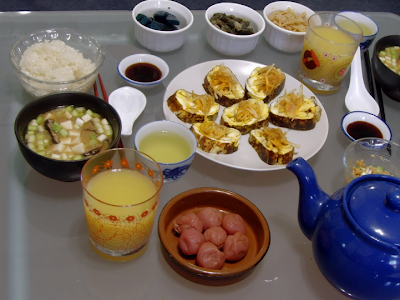
We found a good reference for Japanese breakfasts in a New York Times article by David Kahn from 1992. It provided a lot of ideas about what the meal should include. We chose not to include fish because we could not find any that was reasonably priced and fresh.
We used recipes from Japanese Cooking: A Simple Art by Shizuo Tsuji for the miso soup and rolled omelet. The pickled vegetables, plums, fresh tofu, and various other side dishes were purchased at a specialty Japanese market, though some suitable items are probably available at most Asian markets. We also added natto(1, 2) to the menu for something traditional and adventurous.

Menu
  • Rice - Short grain white rice, steamed in rice cooker
  • Miso Soup - Many miso soup recipes exist online. We feel no need to add to the clutter. A useful technique in Japanese Cooking that is worth passing along is to mix the miso with half as much stock to break up lumps, before mixing it into the soup.
  • Dashi-maki Tamago (Rolled Omelet) - Making a rolled omelet is difficult to describe after a single attempt. We recommend the reader consult a Japanese cookbook for illustrations of the techniques. The basic idea of the Japanese omelet is to roll an omelet and then pour another omelet and let the uncooked egg attach to the base of the rolled omelet and then roll them together. The process is repeated until you use up all of your egg mixture. The omelet is then shaped in a bamboo mat and allowed to cool for a minute. It is them sliced and served topped with shredded daikon that has been marinated in soy sauce.
    Making this omelet is an acquired skill. First, the pan used to make the omelet is a special pan that shapes the omelet. Mistakes I made in this attempt were over cooking the egg. A four egg omelet may also have been too large for the pan. In future attempts I would use 2 or 3 eggs. I anticipate making several more attempts before I get the hang of it.
  • Natto - We got advice for preparing natto from Natto Land.
  • Nori
  • Tsukemono (Pickles) - cucumbers, bamboo shoots, eggplants, and plums (umeboshi)
  • Green tea and orange juice

Results and Discussion
This breakfast very easy with the exception of the omelet. Purchasing all of the pickled dishes saves a lot of time (but costs a lot of money). The miso soups goes together very quickly. Only rice takes time to prepare.
The omelet is not difficult to do if you have made omelets before. The difficulty lies in combining the rolls into a single continuous piece. Messing this part up only affects the cook's pride but not the taste.
I was very neutral about the natto. The texture was slimy but nothing gross. The taste is a little sour and salty but nothing really special. I will probably not seek out natto again but I would eat it if someone served it to me. The pickled plums had a very strong taste that came in short tart burst. The pickled cucumbers tasted like regular pickles but much crunchier. We were planning on having guests so we invested a little more in this meal. In the future we would skip the sides and just have the omelet, rice, and soup.

Saturday, April 10, 2010

Indonesia - Tinutuan


Background

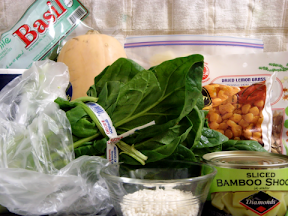
This recipe is adapted from the book Indonesian Regional Cooking by Sri Owen. The recipe is from the city of Manado which is on the north east tip of Sulawesi. We had to vary to recipe at several points. The original recipe called for water spinach instead of kale and fresh lemongrass instead of dried. We omitted the turmeric leaf. The effect of these substitutions on the final product are discussed in the results section.

Ingredients
1/4 cup white rice
3/4 cup of frozen sweet corn
10 oz of peeled and cubed butternut squash
2/3 cups bamboo shoots
1 tsp salt
2 cups of boiled frozen yuca, cubed.
1 tbsp of dried lemon grass
8 oz of fresh spinach
8 oz of fresh kale
20 fresh basil leaves
1 turmeric leaf (optional)

Procedure
Soak rice in cold water for 30 minutes
Bring 5 cups of water to a boil and add rice.
Add corn, squash, bamboo, and salt. Simmer for 20-25 minutes.
Add yuca and simmer for a few minutes.
Refrigerate the soup over night
Reheat soup until hot
Soak lemon grass in 1/4 cup hot water for a few minutes and add to soup.
Add spinach and kale and simmer for 5 minutes.
Add basil leaves, season, and serve hot.


Results and Discussion

The preparation was very straight forward and can be easily done the night before which is what we did. We made several poor choices in our substitutions. Kale was a poor choice for young spinach as it is very chewy and tough. I have not chewed this much at breakfast ever, but I have met my daily fiber requirement. The dried lemongrass was also not a good substitution for fresh. As a result the basil taste of the soup was very strong and lacked a counterpoint. I believe the turmeric leaf would also help with this problem. The texture of the broth was very nice and had subtle sweetness. I would like to try this recipe again with better lemon grass and a green softer than kale.

Saturday, March 27, 2010

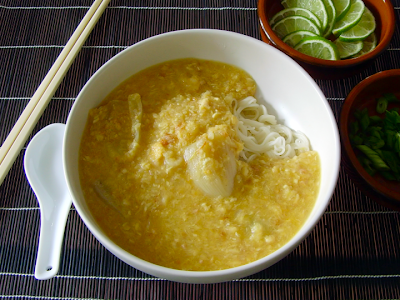
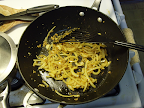
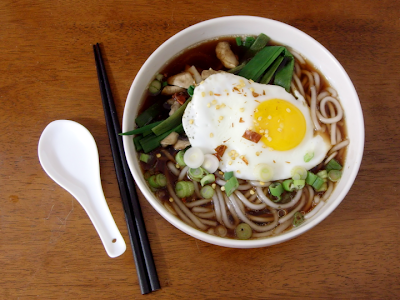
China - Hunanese Soup Noodles


Background

The rice pasta called fen is a specialty of the Hunan region. Fuschia Dunlop in the Revolutionary Chinese Cookbook describes its importance as " Rice fen is eaten for breakfast all over Hunan. Some people buy the freshly made fen and take it home, where they serve it in a bowl of broth, topped perhaps with a fried egg, some sliced scallions, and a dollop of chopped salted chiles" (p.252).

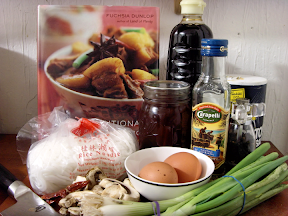
Ingredients (2 servings)
  • 2.5 cups vegetable broth
  • 1/2 bunch scallions
  • 1/2 cup coarsely chopped mushrooms
  • 1 tbsp soy sauce
  • 1/2 tbsp olive or peanut oil
  • Salt and pepper to taste
  • 8 oz fresh rice noodles
  • 2 eggs
  • 2 dried chiles, sliced

Procedure
  1. Start water boiling and in a separate pan heat the vegetable broth.
  2. Chop the tops off the scallions. Trimming off dead ends. Blanch in boiling water with mushrooms. Drain
  3. Thinly slice the bottom part of the scallions.
  4. Prepare the serving bowls by placing some soy sauce, oil, sliced scallions, and salt and pepper to the bottom of each serving bowl.
  5. Boil rice noodles until they are of the desired softness. This happens very quickly with fresh ones. Drain.
  6. Fry 2 eggs sunny side up.
  7. Pour vegetable broth into serving bowl. Add noodles to serving bowls. Top with mushrooms, scallions, fried egg, sliced scallions, and chiles. Serve.


Results and Discussion
This is dish was simple and tasty. Preparation time is about 20 minutes. Making the dish look nice is also very easy. It is very spicy for breakfast but it wakes you up and is very warm. The fresh rice noodles have a very nice texture and soak up the broth's flavor. We would make this again for any meal. Dunlop discusses how this recipe has many different variations so you can top it with whatever strikes your fancy.