Sunday, June 6, 2010

Mexico - Tamales de Anis, Salsa de Cacahuate, Atole


Background
Today's breakfast was brought to you by masa, corn flour, a staple of Mexican cooking. The main course of our breakfast were sweet anise-seed tamales with peanut and chipotle salsa. These recipes were taken from Culinary Mexico by Daniel Hoyer. Our drink was raspberry atole based on a recipe from Zarela's Veracruz by Zarela Martinez.

Tamales de Anis
  • 12 cornhusks
  • 1½ cups instant masa mix (e.g. Maseca)
  • 1½ cups warm water (110-130° F)
  • 2 tbsp butter
  • 2 tbsp lard
  • 3 tbsp water
  • 1 tbsp anise seeds, toasted
  • 1 tsp salt
  • 2 tbsp sugar
  • 1/4 cup chopped prunes
  1. Cover corn husks with hot water and soak for 1 hour.  Drain and pat dry.
  2. Mix masa and warm water stir until you get a crumbly texture. The amount of water to achieve this texture varies so add water slowly.  Let sit for 30 minutes, then weigh out 12 ounces of this mixture (reserve the rest for atole).
  3. Whip butter and lard in a mixing bowl until they are fluffy.
  4. Gradually add masa alternating with the three tablespoons of water.
  5. Mix in anise seeds, salt, sugar, and prunes and beat for 2 minutes until smooth.
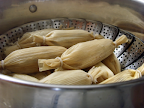
  6. Put 2 tbsp of the mixture on the edge of a corn husk and roll it up.
  7. Tie the ends with kitchen twine, trimming any excess.
  8. Steam for 1 hour and 15 minutes, making sure that the steamer does not go dry.
  9. Let cool for 10 minutes before serving.

Salsa de Cacahuate
  • ½ cup unsalted dry roasted peanuts
  • 1 small onion
  • 3 garlic cloves, peeled
  • 1 medium tomato
  • 2 chipotles in adobo
  • 1½ tsp apple vinegar
  • 3 tbsp chopped cilantro
  1. Slice onions and tomatoes.
  2. Roast onions, tomatoes, and garlic under a broiler.
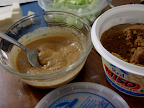
  3. Mix all ingredients, except cilantro, in a blender leaving a coarse texture.
  4. Stir in cilantro and salt to taste just before serving.

Raspberry Atole
  • 1 cup of raspberries
  • 4½ cups of water
  • ¼ cup masa left over from tamales (use more for thicker atole)
  • ¼ cup grated piloncillo sugar
  1. Boil 4 cups of water.
  2. Puree the raspberries and masa with the remaining ½ cup of water.
  3. Push the raspberry puree through a sieve into the boiling water (this removes the seeds).
  4. Add the piloncillo and stir.
  5. Maintain a low boil for 30 minutes as the drink thickens.

Results and Discussion
This breakfast easily took the longest of any of the others. Most of the time was spend making and steaming the tamales. The tamales were firm and moist with the plum providing a sweetness that was an excellent counter point to the heat of salsa. Roasting the vegetables prior to making the salsa provided additional flavor and really enhanced the taste. The recommendation of leaving the salsa "gritty" also gives an excellent texture to the salsa. The raspberry atole was a tasty drink and could be flavored with any berry of your choosing.
For advice on how to roll tamales we consulted How To Cook Everything by Mark Bittman which has excellent illustration.
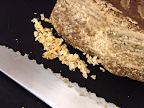
Cutting the piloncillo presented a special challenge. The block of sugar is very hard and it is impossible to break of parts. We resorted to using a serrated knife to shave off the sugar as needed. In Columbia a stone is common used to break the block apart but we live in an apartment.

Sunday, May 30, 2010

Japan - Rice, Miso Soup, Tamago, and Tsukemono


Background
We found a good reference for Japanese breakfasts in a New York Times article by David Kahn from 1992. It provided a lot of ideas about what the meal should include. We chose not to include fish because we could not find any that was reasonably priced and fresh.
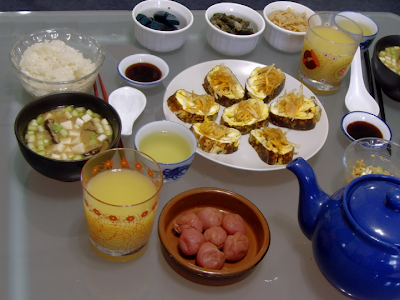
We used recipes from Japanese Cooking: A Simple Art by Shizuo Tsuji for the miso soup and rolled omelet. The pickled vegetables, plums, fresh tofu, and various other side dishes were purchased at a specialty Japanese market, though some suitable items are probably available at most Asian markets. We also added natto(1, 2) to the menu for something traditional and adventurous.

Menu
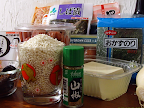
  • Rice - Short grain white rice, steamed in rice cooker
  • Miso Soup - Many miso soup recipes exist online. We feel no need to add to the clutter. A useful technique in Japanese Cooking that is worth passing along is to mix the miso with half as much stock to break up lumps, before mixing it into the soup.
  • Dashi-maki Tamago (Rolled Omelet) - Making a rolled omelet is difficult to describe after a single attempt. We recommend the reader consult a Japanese cookbook for illustrations of the techniques. The basic idea of the Japanese omelet is to roll an omelet and then pour another omelet and let the uncooked egg attach to the base of the rolled omelet and then roll them together. The process is repeated until you use up all of your egg mixture. The omelet is then shaped in a bamboo mat and allowed to cool for a minute. It is them sliced and served topped with shredded daikon that has been marinated in soy sauce.
    Making this omelet is an acquired skill. First, the pan used to make the omelet is a special pan that shapes the omelet. Mistakes I made in this attempt were over cooking the egg. A four egg omelet may also have been too large for the pan. In future attempts I would use 2 or 3 eggs. I anticipate making several more attempts before I get the hang of it.
  • Natto - We got advice for preparing natto from Natto Land.
  • Nori
  • Tsukemono (Pickles) - cucumbers, bamboo shoots, eggplants, and plums (umeboshi)
  • Green tea and orange juice

Results and Discussion
This breakfast very easy with the exception of the omelet. Purchasing all of the pickled dishes saves a lot of time (but costs a lot of money). The miso soups goes together very quickly. Only rice takes time to prepare.
The omelet is not difficult to do if you have made omelets before. The difficulty lies in combining the rolls into a single continuous piece. Messing this part up only affects the cook's pride but not the taste.
I was very neutral about the natto. The texture was slimy but nothing gross. The taste is a little sour and salty but nothing really special. I will probably not seek out natto again but I would eat it if someone served it to me. The pickled plums had a very strong taste that came in short tart burst. The pickled cucumbers tasted like regular pickles but much crunchier. We were planning on having guests so we invested a little more in this meal. In the future we would skip the sides and just have the omelet, rice, and soup.

Sunday, May 23, 2010

Russia - Blinchiki, Oladushki, Sirniki, and Makivnek


For this week, we were fortunate enough to get Please to the Table, by Anya von Bremzen and John Welchman.  This is my favorite cookbook so far, not least because it has an entire chapter devoted to breakfast in Russia and the now-former Soviet states. (The book was first published in 1990, and so has a map of the USSR in the front, something I'd not seen for quite some time!).  We will probably be returning to this book later on as we get to some of the other post-USSR countries.

Before we get to the breakfast itself, take a look at the Wikipedia entry for samovar, which explains why there are two teapots on our breakfast table.

For the meal itself, the authors describe weekend brunch:
These occasions will include a variety of little pancakes or fritters (oladyi); sirniki—sweet cheese patties; blinchiki—mouthwatering filled crêpes; and freshly baked rolls and buns eaten with fruity homemade preserves. (464)
With the plan so neatly set out for us, we couldn't really leave anything out.  I have adapted all of the recipes to make a more sensible amount of food for us, but honestly we could have fed four with no problem.  We were pretty pleased with everything, with the sirniki being the big favorite.  But the thing we'll probably make again is the bread; the recipe is so adaptable, and the bit of lemon in the makes it really special.  And don't worry, Whit is saving the extra pancakes for tomorrow, and I'll take the remaining poppy-seed bread to work tonight, so nothing went to waste!